I love getting mail, but I don't like the junk mail. There is a way to reduce if not eliminate the amount of unwanted paper coming into your mailbox, it's called opting out.
There are several websites you should visit to help you "opt out" of receiving generic junk mail. Here are a few sites to get you started:
www.optoutprescreen.com This site stops pre-approved financial offers. You can opt out for five
years or permanently. Each adult living at your address must enter an individual request.
dmachoice.thedma.org This site prevents unsolicited commercial mail from many national brands
for a five year period.
www.valpak.com/coupons/show/mailinglistsuppression and www.redplum.com To stop receiving bulk coupon mailers from smaller brokers not
registered with the DMA.
www.yellowpagesoptout.com To opt out of telephone directories in your area.
Until your requests are activated shred your address from any incoming junk mail.
Friday, November 4, 2016

Tuesday, June 14, 2016
To VPN or not to VPN, that is the question
A Virtual Private Network (or VPN) is a tool used by businesses (and many individuals) to protect data transmitted over the Internet. The VPN creates a secure connection (called a tunnel) which encrypts the data providing secure a medium for the transmission. The VPN also protects data privacy by preventing hackers from being able to read your web traffic since the traffic is unreadable.
Generally society does not understand the risks in using the Internet from a public place (hotels, airports, bookstores, coffee shops, etc.). The Internet is full of free tools that allow any person (or hacker) to secretly capture data (or live session data) while you're connected to an unprotected public WiFi. One way to capture data is using a Man-in-the-middle attack. Hackers configure equipment (such as the WiFi pineapple) between you and the Internet connection point to covertly copy of all the data you're transmitting.
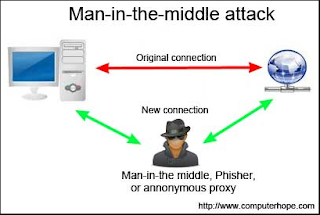
The end user has no way of knowing that every keystrokes is being captured. The hacker may immediately sent to other parties who scour the data usernames, credit card numbers and other information sent in plain text.
Individuals who access the Internet using a public WiFI (without the benefit of a VPN connection) face many risks. A hacker can set up a fake network with a legitimate name to capture data from unsuspecting users who connect to it. It's never safe to assume that the network you're connecting to is legitimate. The WiFi Pineapple is designed to capture data from an unsuspecting victim. There are numerous youtube videos that document how to do this in 10 minutes or less: https://www.youtube.com/watch?v=x0ma1vyHcyg
It makes sense to protect yourself and your data. Running a VPN to protect your data makes sense anytime you're connected to a public WiFi network. If you work for a company, establish the corporate VPN solution managed by your organization. The VPN allows you to securely access the corporate network AND it prevents hackers from intercepting the data you transmit over the Internet. The VPN protects data moving across a public network by encrypting the data. Encryption is a process that converts readable data into gobbledygook, or something that is unreadable. Once the data is back to a trusted server the data is decrypted back into a readable form.
Many individuals are also using VPN software to protect their privacy and data. PC News provides a number of solutions in their June 13, 2016 article, The Best VPN Services of 2016 at http://www.pcmag.com/article2/0,2817,2403388,00.asp
Looking for more information about the risk in using public WiFi? Look no further than an article written by SavvyMedia Gal27 "Why Hackers Love Public WiFi" at https://community.norton.com/en/blogs/norton-protection-blog/why-hackers-love-public-wifi
If you value your privacy and want to protect your data, get and use a VPN.
 |
| Image credit |
Generally society does not understand the risks in using the Internet from a public place (hotels, airports, bookstores, coffee shops, etc.). The Internet is full of free tools that allow any person (or hacker) to secretly capture data (or live session data) while you're connected to an unprotected public WiFi. One way to capture data is using a Man-in-the-middle attack. Hackers configure equipment (such as the WiFi pineapple) between you and the Internet connection point to covertly copy of all the data you're transmitting.

The end user has no way of knowing that every keystrokes is being captured. The hacker may immediately sent to other parties who scour the data usernames, credit card numbers and other information sent in plain text.
Individuals who access the Internet using a public WiFI (without the benefit of a VPN connection) face many risks. A hacker can set up a fake network with a legitimate name to capture data from unsuspecting users who connect to it. It's never safe to assume that the network you're connecting to is legitimate. The WiFi Pineapple is designed to capture data from an unsuspecting victim. There are numerous youtube videos that document how to do this in 10 minutes or less: https://www.youtube.com/watch?v=x0ma1vyHcyg
It makes sense to protect yourself and your data. Running a VPN to protect your data makes sense anytime you're connected to a public WiFi network. If you work for a company, establish the corporate VPN solution managed by your organization. The VPN allows you to securely access the corporate network AND it prevents hackers from intercepting the data you transmit over the Internet. The VPN protects data moving across a public network by encrypting the data. Encryption is a process that converts readable data into gobbledygook, or something that is unreadable. Once the data is back to a trusted server the data is decrypted back into a readable form.
Many individuals are also using VPN software to protect their privacy and data. PC News provides a number of solutions in their June 13, 2016 article, The Best VPN Services of 2016 at http://www.pcmag.com/article2/0,2817,2403388,00.asp
Looking for more information about the risk in using public WiFi? Look no further than an article written by SavvyMedia Gal27 "Why Hackers Love Public WiFi" at https://community.norton.com/en/blogs/norton-protection-blog/why-hackers-love-public-wifi
If you value your privacy and want to protect your data, get and use a VPN.
Tuesday, January 5, 2016
Spotting a Scam
The phone rang today and my caller ID showed a company name that I am familiar with. The caller did not pronounce my last name correctly and I could hear other people in the background talking in what sounded like a call center. How do you handle calls like this? For me, I simply asked the caller to take me off 'the list' before hanging up.
The caller ID feature was initially designed to provide accurate information about the identity of callers. It didn't take too long before someone figured out how to modify the information displayed. This is also known as "spoofing". Did you know that there are tools available on the Internet (free or at low cost) to change the information on your caller ID? Check your favorite Internet search engines (Google, Bing, etc.); search for "disguise phone number" or "mask your phone number". You might be surprised how many tools are available. Here is an example of a free app that will modify the caller ID displayed on your cell phone:


The caller ID feature was initially designed to provide accurate information about the identity of callers. It didn't take too long before someone figured out how to modify the information displayed. This is also known as "spoofing". Did you know that there are tools available on the Internet (free or at low cost) to change the information on your caller ID? Check your favorite Internet search engines (Google, Bing, etc.); search for "disguise phone number" or "mask your phone number". You might be surprised how many tools are available. Here is an example of a free app that will modify the caller ID displayed on your cell phone:

Another tool allows you to make a call via the Internet. You enter the caller ID information you want displayed. You're also provided options including the ability to change the pitch of your voice during the call. The site offers a trial version to test making a call but the normal rates run from $0.10 to $0.50 per minute for services ranging from caller ID spoofing, text message capability, voice modification and the option to record your call for up to 6 months. Those costs are pretty reasonable which makes this something for just about anyone.

It might seem like this should be illegal but it isn't. The FCC created the Truth in Caller ID Act (read more about the Act at: https://consumercomplaints.fcc.gov/hc/en-us/articles/202654304-Caller-ID-and-Spoofing) to provide consequences for some types of caller ID fraud. The Act prohibits "any person or entity from transmitting misleading or inaccurate caller ID information with the intent to defraud, cause harm, or wrongfully obtain anything of value." Violators may be subject to a fine of up to $10,000 for each violation.
The FCC requires that violators intended to "defraud, cause harm or wrongfully obtain anything of value". The Merriam-Webster dictionary defines the word defraud as "to trick or cheat someone or something in order to get money: to use fraud in order to get money from a person, an organization, etc.". Unless the "prankster" defrauds, causes harm or wrongfully obtains anything of value, the recipient may not file a complaint with the FCC. The FCC provides a link to file an online complaint when the conditions are met.
Courts and Law Enforcement agencies are exempt from the FCC Act. That's probably not a bad idea given that they're generally dealing with people who can't comply with the standards of laws. You might wonder how telemarketers get around this rule. Telemarketers are permitted to modify their caller ID to show the name and main telephone number of the organization since they may have employees calling from multiple locations. This main company phone number displayed must provide consumers a way to opt out of future telephone calls. I'll keep this in mind for the future.
Never rely on the information displayed on your caller ID as trustworthy. I provided you two examples of tools that demonstrate how easy it is to change the caller ID displayed on the receivers device; there are many more tools out there. Many people will use these tools without considering the consequences or when they're in jeopardy of violating the Truth in Caller ID Act. Be careful, unless you initiated the call do not provide personal information to the caller, even when the
caller ID displays the name of a company that might be calling to tell you you've won millions or have a date with a star. Check the Internet for a credible phone number to return the call.
Sunday, November 1, 2015
Breach Notification Laws 2015
We continue to hear about security breaches through the newspapers however it's important that consumers understand that each state has instituted policies that provide information about when notification must be made to consumers. You may have thought you would be notified if and when your data is lost, but depending on where you live and how many records were lost you may not be notified.
Just this year alone 32 states have introduced legislation related to improving breach notification including the protection of student data and health information. Residents of Virginia benefit from HB 2350 signed into law on March 23, 2015 which requires schools to implement policies and procedures to protect student data and systems. It also requires that a Chief Data Security Officer be designated to assist the schools. However, HB 2362 failed which required the Chief Information Officer to develop policies and procedures to ensure prompt breach notification when the responsible party is the state.
Read more about how your state is working to try to protect you at: http://www.ncsl.org/research/telecommunications-and-information-technology/2015-security-breach-legislation.aspx
Just this year alone 32 states have introduced legislation related to improving breach notification including the protection of student data and health information. Residents of Virginia benefit from HB 2350 signed into law on March 23, 2015 which requires schools to implement policies and procedures to protect student data and systems. It also requires that a Chief Data Security Officer be designated to assist the schools. However, HB 2362 failed which required the Chief Information Officer to develop policies and procedures to ensure prompt breach notification when the responsible party is the state.
Read more about how your state is working to try to protect you at: http://www.ncsl.org/research/telecommunications-and-information-technology/2015-security-breach-legislation.aspx
Sunday, September 20, 2015
Protecting Your Healthcare Data
Healthcare providers are required to protect your medical information. The problem is that many people have their hands on your information... some of them are careless (based on other breaches we know about) and some of the controls protecting the information could fail. So what can you do to be proactive about protecting your medical data (or medical identity)?
If you discover that your medical identity has been used by someone other than yourself you must take action.
Medical identity theft could be a serious issue for you! If you are in a situation where you are unable to speak for yourself (for example if you are the victim of an accident) erroneous information in your medical files could cause serious problems with your care. Protect the health information to the best of your ability then monitor your insurance records and finally take steps to remedy issues with your medical identity if you discover issues.
- Review your insurance statements. If you get them through the mail, read them. If you access them online, check regularly to be sure that your records reflect accurate services provided to you and your family.
- Many providers allow patients to access healthcare information electronically. If you use this option, be sure that you safeguard your access information (username/password).
- Be leery of "free" health services or product offers that require you to provide your health plan identification information. If it's truly free, there is no reason anyone needs your insurance information.
- Never provide your health plan identification information to callers unless you initiated the contact.
- Keep your health care information in a safe place. Shred old/unnecessary information.
- Be mindful that it may be possible to use your medical identity without your insurance information. If asked to provide your social security number, be sure to ask why it's needed, how it will be safeguarded, whether the information will be shared and if it is shared - with whom. Also, read the Privacy Policy if the request is made on a website.
If you discover that your medical identity has been used by someone other than yourself you must take action.
- Request copies of your medical records for treatment, etc.. Federal law provides you the right to know what is in your medical records. Scrutinize your files for errors.
- Contact the healthcare professionals that provided services to the thief (physician, clinic, hospital, pharmacy, laboratories and other providers). Request that the records and details regarding the service from the individual who provided services be provided to you in writing.
- If the provider refuses to provide you the information in writing, contact the person listed in the Notice Privacy Practices, Patient Representative or ombudsman for the organization. Contact the U. S. Department of Health and Human Services' Office for assistance.


| Image source: http://oig.hhs.gov/fraud/medical-id-theft/OIG_Medical_Identity_Theft_Brochure.pdf |
- Contact your health insurance company to notify them that your medical identity has been compromised. Provide specific details including the medical records and what information is incorrect. Provide them information that demonstrates that the information is incorrect. Direct them to remove the information and notify the providers. If you do this over the phone document the conversation (date, time, who you spoke with, what was said). Back up the phone call with written documentation to the insurance company. Send all written correspondence with certified mail with a return receipt.
- Contact medical professionals involved in the fraudulent care. Tell them that the patient was not you. Direct them to remove the information from your medical records. Back everything said on the phone up with a paper request. Send certified mail.
- The insurance company and health care provider MUST respond to your written correspondence within 30 days.
- Retain all documentation in a safe place.
Medical identity theft could be a serious issue for you! If you are in a situation where you are unable to speak for yourself (for example if you are the victim of an accident) erroneous information in your medical files could cause serious problems with your care. Protect the health information to the best of your ability then monitor your insurance records and finally take steps to remedy issues with your medical identity if you discover issues.
Friday, June 5, 2015
The Newest Federal Breach
It was announced on Thursday, June 4, 2015 that a massive
breach at OPM compromised personal information from 4 million
current and former federal employees.
CNN reported that this may be the largest breach ever. Details about how the breach occurred, whose
personal information was compromised and what information was retrieved is not known yet. The only thing we know for sure is that individuals whose personal information was compromised will receive a letter or
email message between June 8 and June 19.
As a federal employee I hope this is your first experience as a potential victim
of a cyber-breach. Based on information
shared with me from victims of other breaches (IRS, Home Depot, Target and
Blue Cross Blue Shield etc) there are a few things you need to know:
- If you receive a letter saying that your personal information was compromised take immediate action to request credit monitoring from CSID. Do not wait! Complete all steps so that you can take full advantage of all remedies available to you.
- Place a fraud alert at the credit bureaus (Experian, TransUnion or Equifax). An Initial Fraud alert on your credit file lets creditors know that you believe you may have been a victim of fraud or are at risk of being a victim. The alert is FREE and lasts 90 days. The fraud alert requires creditors to check with you before opening a credit account in your name, increasing the credit limit on an existing account, or issuing a new card on an existing account. You only need to contact one credit bureau. The bureaus automatically transmit a request to the other two bureaus on your behalf.
- Be suspicious of email messages, telephone calls, or other communications requesting account information. Do not follow links in email messages that ask for a username, password, credit card or social security number. Call the organization using a trusted phone number.
- Check your credit report regularly. The Fair Credit Reporting Act (FCRA) requires each of the nationwide credit reporting companies — Equifax, Experian, and TransUnion — to provide you with a free copy of your credit report, at your request, once every 12 months.
- Consider all the ways someone might use your personal information to access other systems. Your personal information could be used to file a fraudulent tax return or to get medical treatment.
Keep your head up and be alert to potential scams.
The agencies that were impacted by the breach should be talking to their employees to ensure they are following polices and best practices. This breach won't be the last one, so the smartest thing to use it as an opportunity to emphasize the importance of IT Security.
Tuesday, May 26, 2015
We should have been able to predict this....
The Associated Press revealed that thieves gathered information from 100,000 US taxpayers between February through May of this year. They used an IRS system called "Get Transcript" where tax returns can be downloaded from the IRS by simply providing a social security number, birth date, tax filing status and street address. With all the recent breaches I can't help but wonder if the stolen health care data from Primera and BlueCross BlueShield or even the data from the Target or Home Depot breaches was used with the IRS system to get the tax data...
If the thieves already know your name, birth date, social security number and address the only thing they have to guess is whether a person filed as married, single or head of household. It's a wonder that this didn't happen sooner. It's possible that the thieves will use this data to open credit cards or to this information to file a fraudulent tax return in the future.
We're all vulnerable here. If you haven't done it already, please lock down your credit. Each of the 50 states have enacted legislation that allows consumers to lock down our credit records at the three credit bureaus: Experian, Equifax and Transunion. Please go to the URLs to learn how to lock down your credit:
Experian: https://www.experian.com/freeze/center.html
Equifax: https://www.freeze.equifax.com/Freeze/jsp/SFF_PersonalIDInfo.jsp
Transunion: http://www.transunion.com/personal-credit/credit-disputes/credit-freezes.page?
In the theme of thinking about what is logically next based on these breaches, think of medical identity theft. This is a fairly new type of fraud targeting your medical identity. In this case, someone other than you uses your identity for their health care. When someone other than you uses your identity for health services, their information is tied back to you. I read about a young girl whose medical identity was used for AIDS treatment by someone other than her. The young girl learned that something was wrong when she tried to donate blood. Imagine if she had been in an accident or if that incorrect data was provided to an employer, school or some other person or institution that made decisions about her future.
Insurance companies are also going to be left holding the bag for services and procedures given to someone other than the person paying for the insurance.
It's time to consider your health identity. Next time you visit your health care provider verify that the information in your records is correct and consistent with the services you receive. I predict that we will see additional steps taken by health care providers to ensure we are who we say we are. Something like a providing picture identification might be required.
Legislation needs to be enacted to mandate that the health care industry protect our sensitive information. (Currently the health care industry is not as well regulated as the financial industry.)
The bottom line is that we need to think about how these breaches might impact other parts of our lives. The IRS should have has a system in place that evaluated requests to uncover the fraud sooner so that a quicker response could have been made.
What other systems can be used to violate the privacy and security of our data? These systems need to be identified and evaluated consistently, breach notification needs to be made sooner so that future issues can be prevented.
If the thieves already know your name, birth date, social security number and address the only thing they have to guess is whether a person filed as married, single or head of household. It's a wonder that this didn't happen sooner. It's possible that the thieves will use this data to open credit cards or to this information to file a fraudulent tax return in the future.
We're all vulnerable here. If you haven't done it already, please lock down your credit. Each of the 50 states have enacted legislation that allows consumers to lock down our credit records at the three credit bureaus: Experian, Equifax and Transunion. Please go to the URLs to learn how to lock down your credit:
Experian: https://www.experian.com/freeze/center.html
Equifax: https://www.freeze.equifax.com/Freeze/jsp/SFF_PersonalIDInfo.jsp
Transunion: http://www.transunion.com/personal-credit/credit-disputes/credit-freezes.page?
In the theme of thinking about what is logically next based on these breaches, think of medical identity theft. This is a fairly new type of fraud targeting your medical identity. In this case, someone other than you uses your identity for their health care. When someone other than you uses your identity for health services, their information is tied back to you. I read about a young girl whose medical identity was used for AIDS treatment by someone other than her. The young girl learned that something was wrong when she tried to donate blood. Imagine if she had been in an accident or if that incorrect data was provided to an employer, school or some other person or institution that made decisions about her future.
Insurance companies are also going to be left holding the bag for services and procedures given to someone other than the person paying for the insurance.
It's time to consider your health identity. Next time you visit your health care provider verify that the information in your records is correct and consistent with the services you receive. I predict that we will see additional steps taken by health care providers to ensure we are who we say we are. Something like a providing picture identification might be required.
Legislation needs to be enacted to mandate that the health care industry protect our sensitive information. (Currently the health care industry is not as well regulated as the financial industry.)
The bottom line is that we need to think about how these breaches might impact other parts of our lives. The IRS should have has a system in place that evaluated requests to uncover the fraud sooner so that a quicker response could have been made.
What other systems can be used to violate the privacy and security of our data? These systems need to be identified and evaluated consistently, breach notification needs to be made sooner so that future issues can be prevented.
Subscribe to:
Posts (Atom)